Introduction
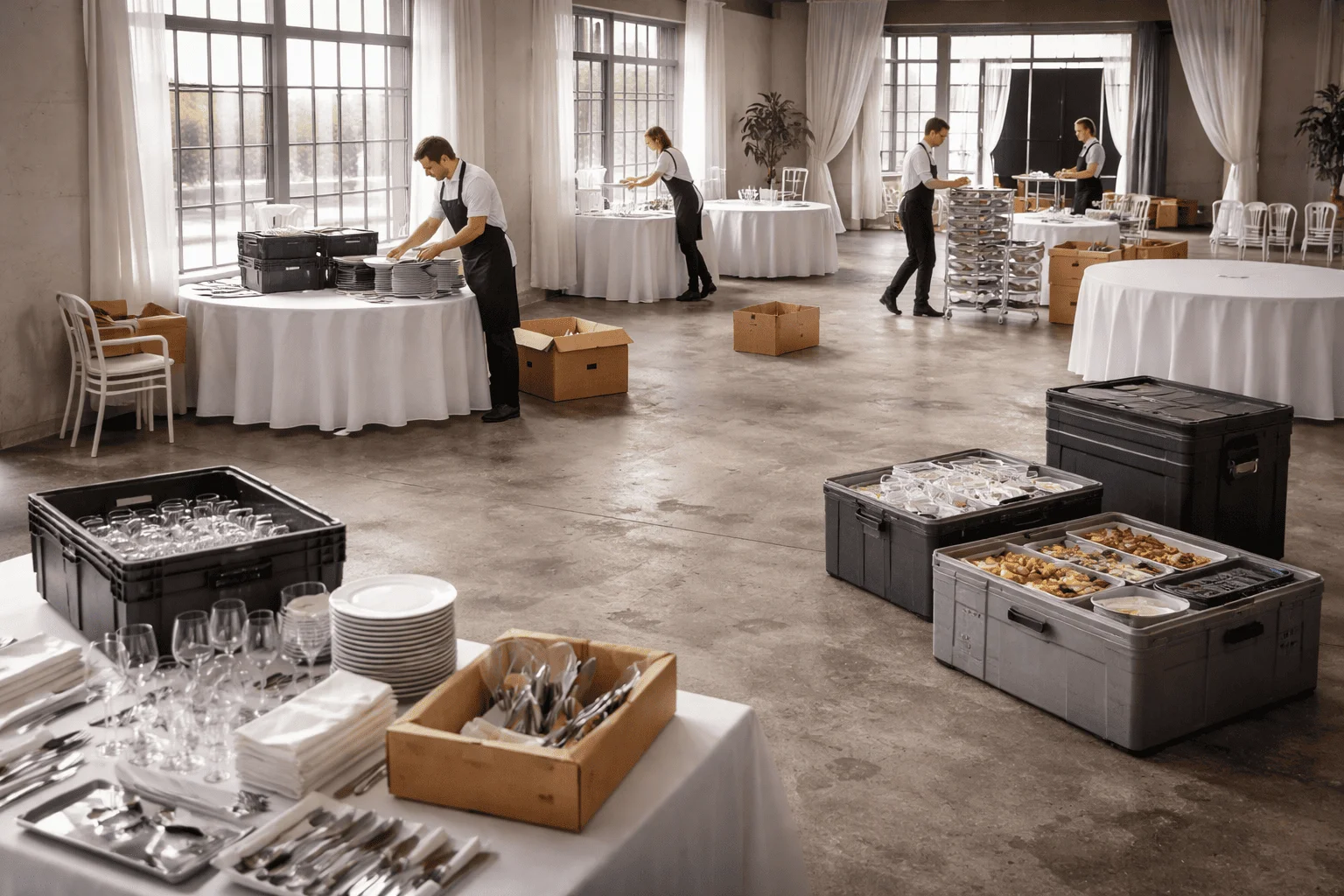
One of the most common questions when preparing an event is how many waiters will be needed.
At first glance, it seems like simple math: there’s a number of guests, so you can quickly calculate and get an answer.
But in practice, it works differently. The number of staff is not a formula, but a result of understanding the format, scenario, and level of service.

Why There Is No Universal Number
Events differ not only in the number of guests but also in dynamics.
Buffet, banquet, business reception, or presentation — each format requires a different approach. In some cases, guests move around actively, in others, they sit at tables; sometimes speed is important, while at other times, attention to detail is key.
That’s why the same number of guests can require a different number of waiters.
Buffet: Managing the Flow
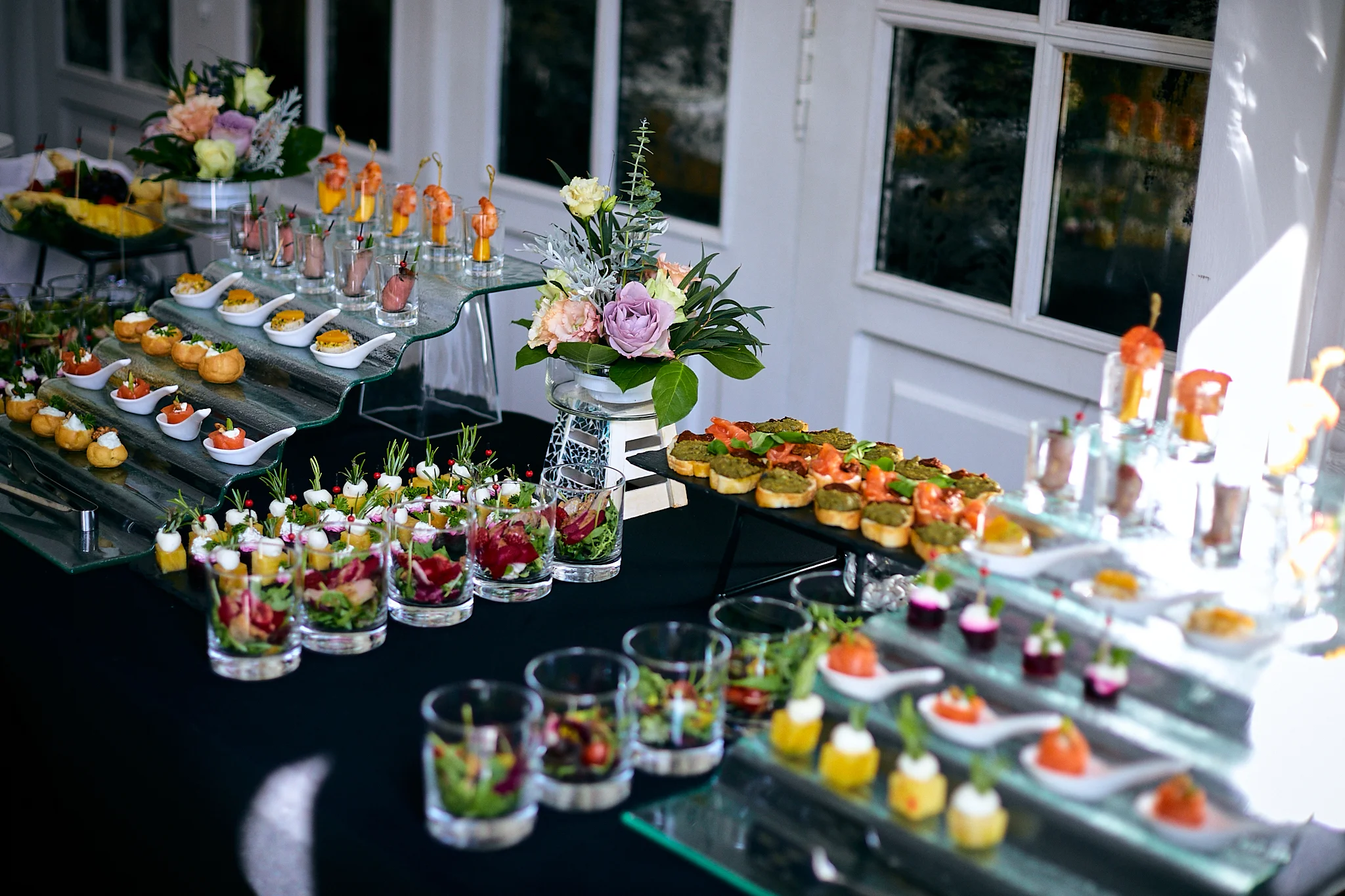
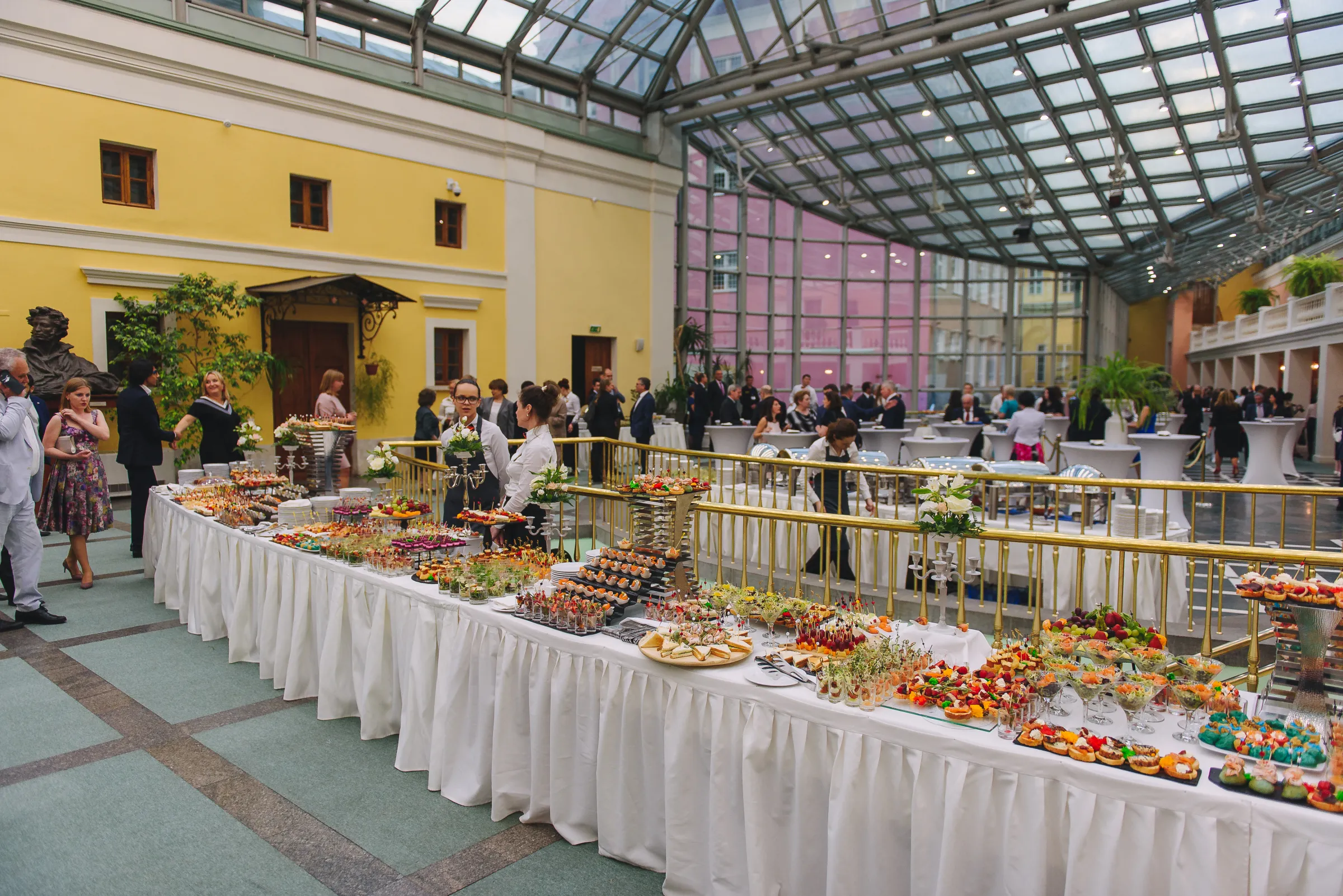
In a buffet format, the main task of the team is to maintain movement and order.
Waiters clear dishes, keep things clean, help guests navigate, and timely replenish food lines.
Here, reaction speed and distribution throughout the hall are crucial. A lack of staff is immediately noticeable: tables become overcrowded, and a sense of chaos emerges.
Banquet: Attention to Each Guest
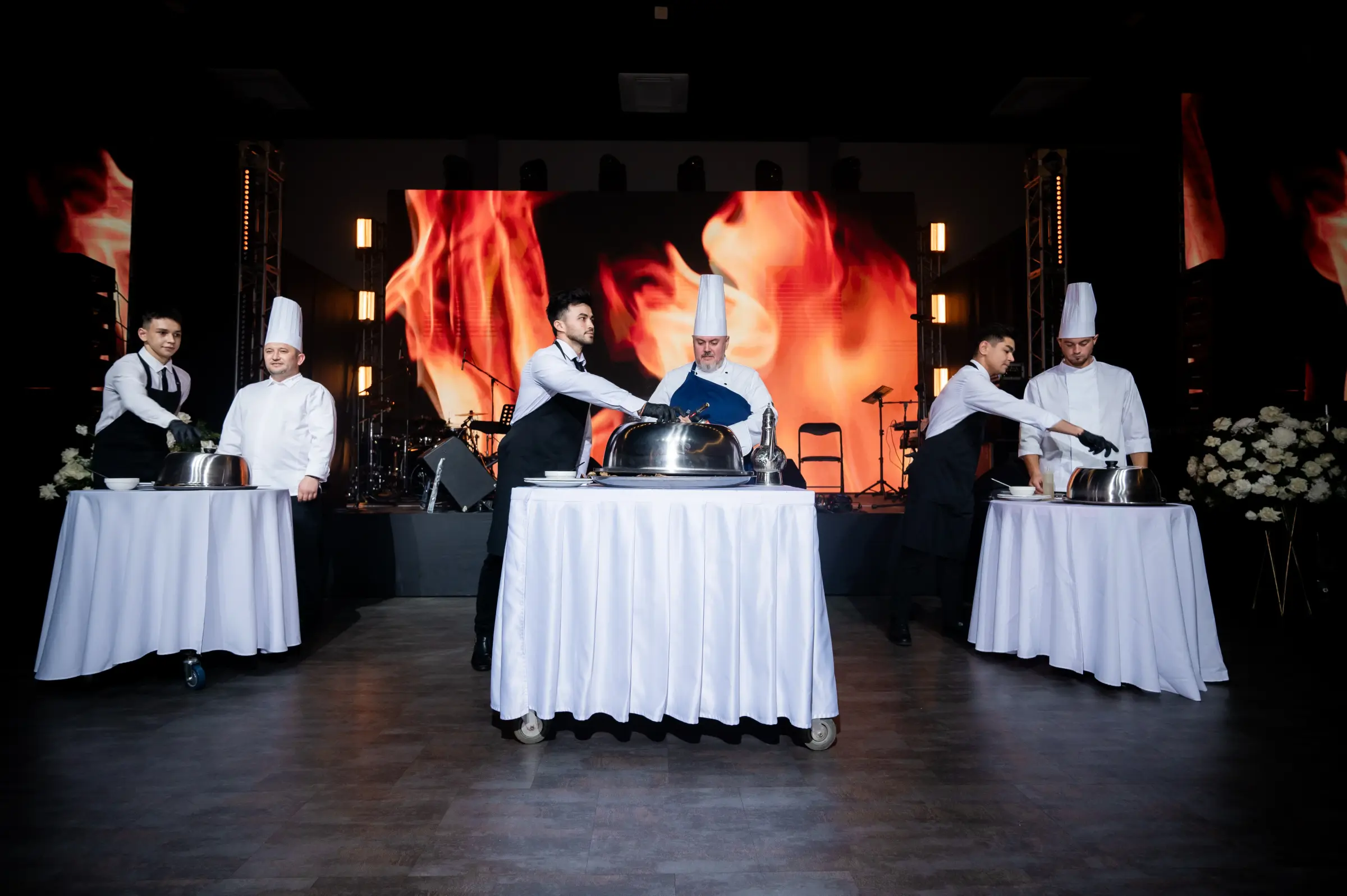
In a banquet format, service becomes more focused.
Waiters work with specific tables, monitor the serving of dishes, drinks, and the comfort of guests.
Here, not only the number but also the level of team preparation is important. Service should be attentive but unobtrusive.
Business Events
In business events, rhythm plays a key role.
Coffee breaks, pauses, format changes — all of this requires precise teamwork. Waiters must react quickly while remaining unobtrusive.
It’s important to ensure enough staff to avoid queues and not slow down the process.
What Influences the Number of Waiters
The decision is always based on several factors.
These include the event format, duration, guest density, menu complexity, beverage availability, and venue specifics.
The more complex the scenario and higher the service requirements, the more attention the team needs.
Balance Between Quantity and Quality
It’s not only about the number of waiters but also their training.
An experienced team can work more efficiently and create a sense of calm even under high loads.
At the same time, a lack of staff cannot be compensated for even by a high level of preparation.
Conclusion
The number of waiters is part of the overall event system.
When the calculation is done correctly, the service becomes seamless, and guests feel comfortable.
At Concept Catering, we always start not from a formula but from the task — to ensure that every detail contributes to the overall result.