Introduction
The menu is one of the key parts of any event. It is through the menu that guests first get acquainted with the level and style of the occasion.
At first glance, it may seem quite simple: you just need to choose dishes, determine the number of servings, and agree on the presentation. But in reality, the menu is the result of precise work involving several factors.
The format of the event, the script of the evening, the characteristics of the venue, the number of guests, and logistics—all of these directly influence the final structure of the menu. Therefore, professional catering always starts not with choosing dishes, but with understanding the entire system of the event.

Event Format
The formation of the menu always begins with the format of the event.
Different types of events require different solutions:
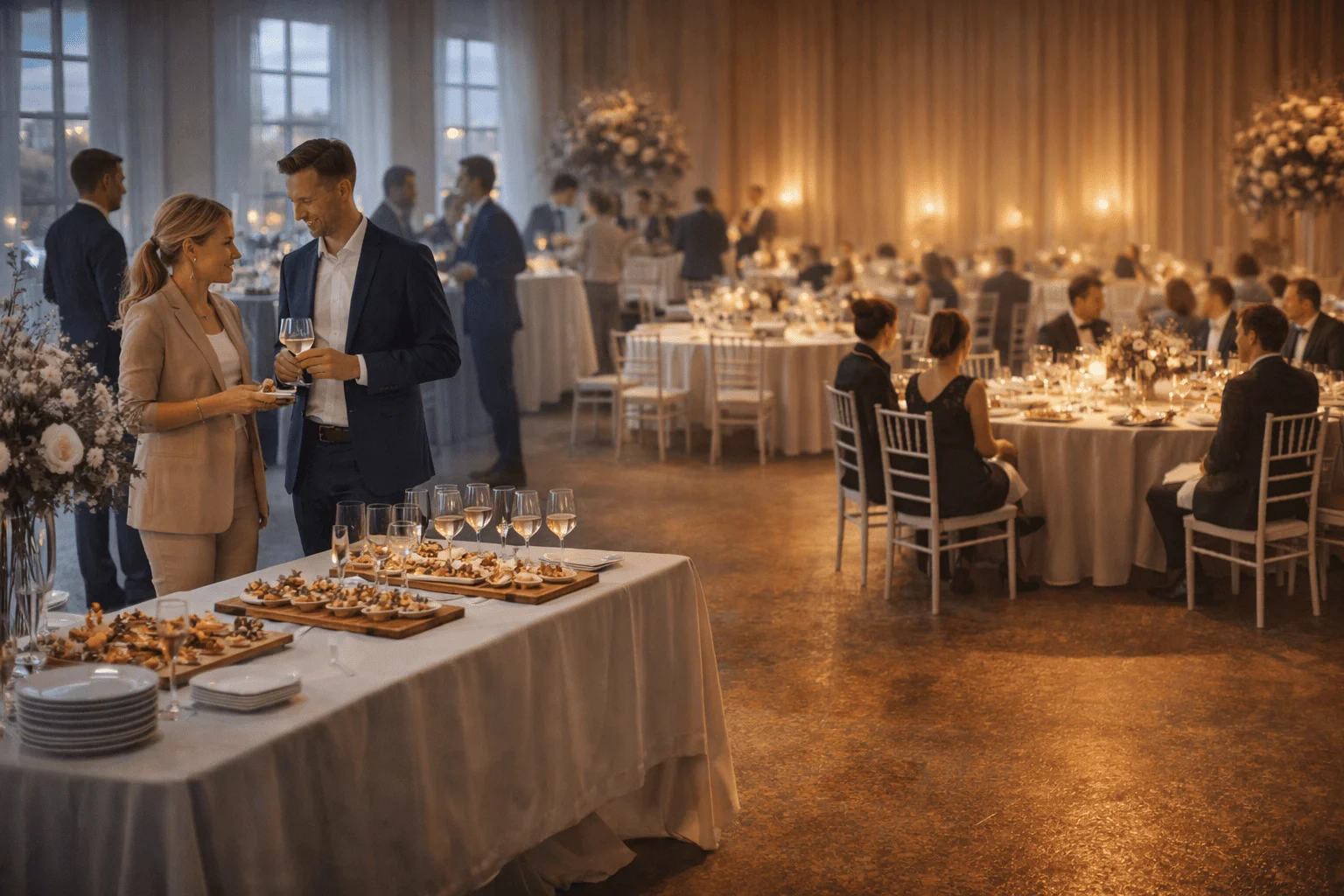
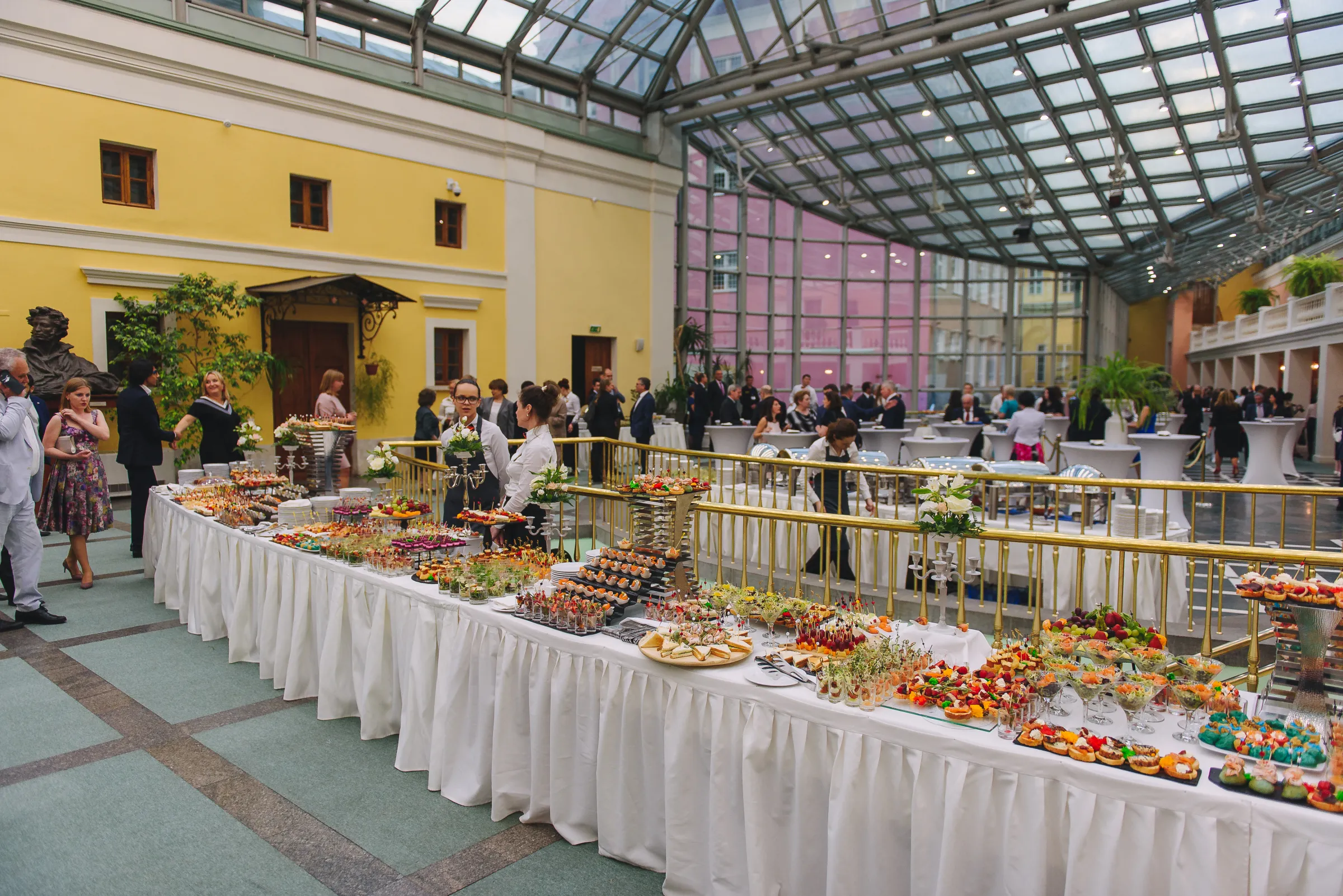
business reception
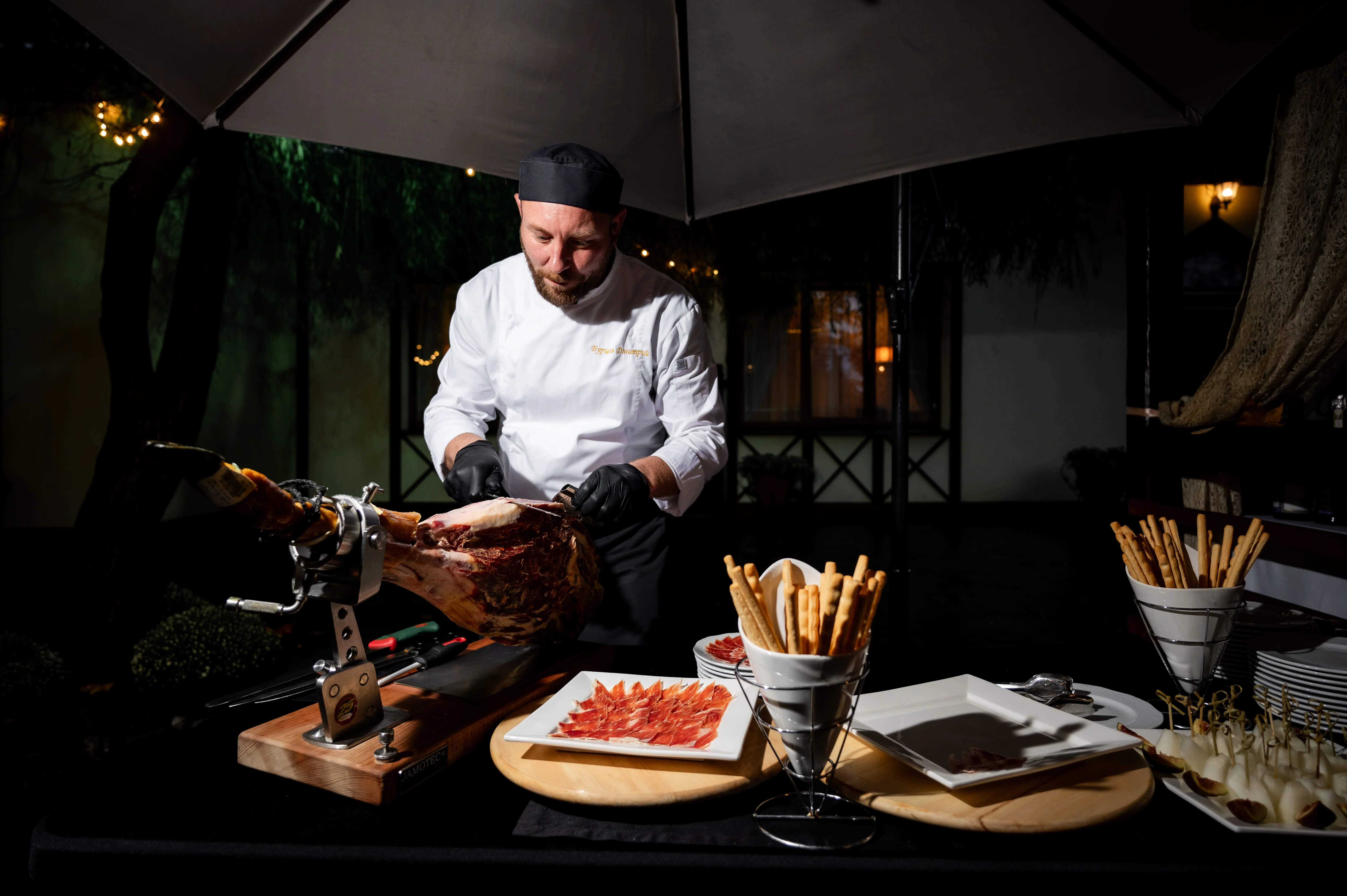
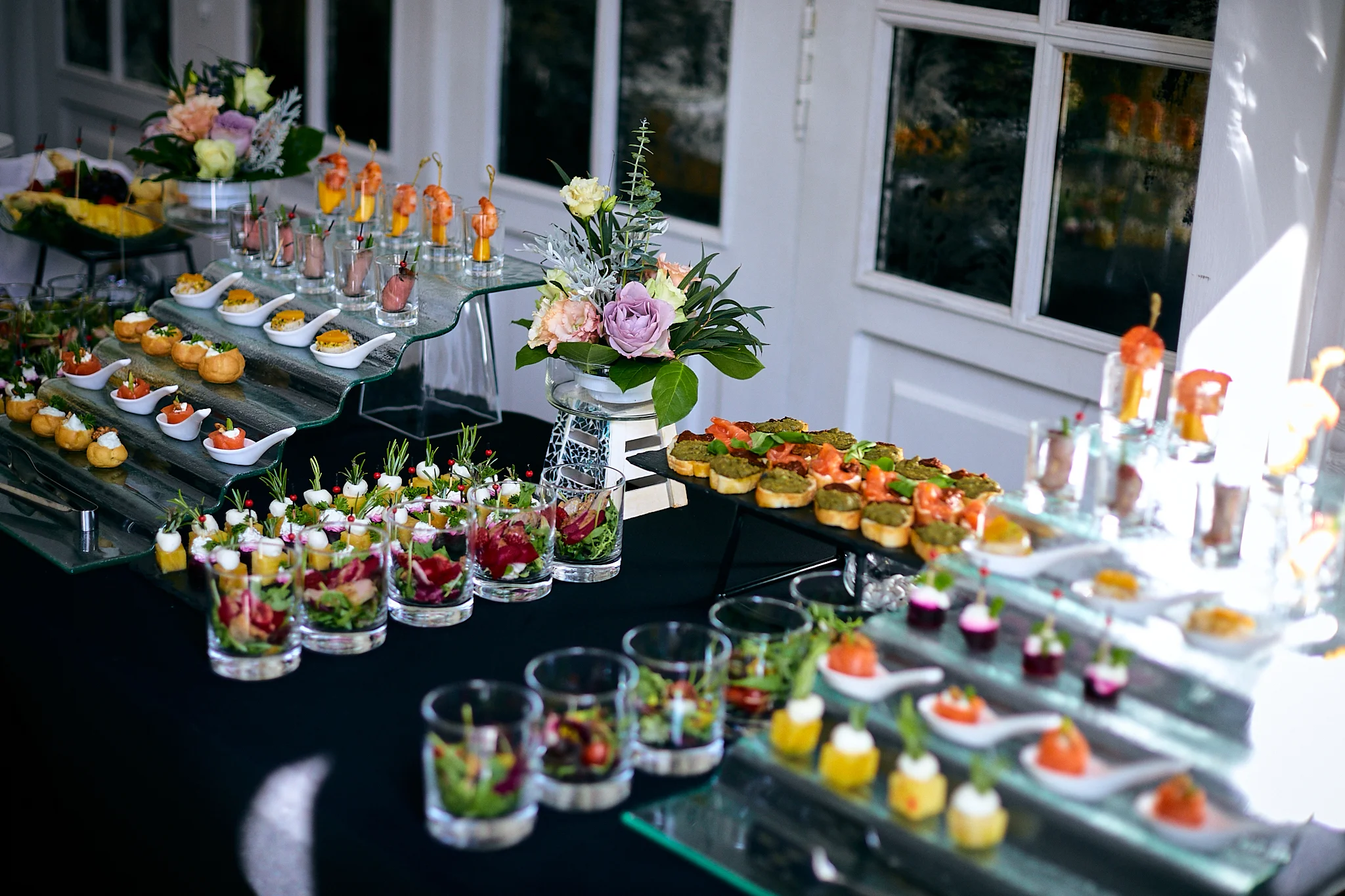
gastronomic stations
Each format sets its own logic: from the structure of the menu to the portion sizes and the way dishes are served. What is perfect for a banquet may be inconvenient for a dynamic buffet.
Event Script and Dynamics
The menu is always connected to how the event itself unfolds.
It is important to consider:
the duration of the event
the presence of an active program
the change of dishes and stages of serving
the time guests spend at the table
For example, at events with a busy program, preference is given to lighter and more convenient serving formats. In calmer formats, on the other hand, there is an opportunity for a sequential gastronomic experience and more complex dishes.
Balance and Structure of the Menu
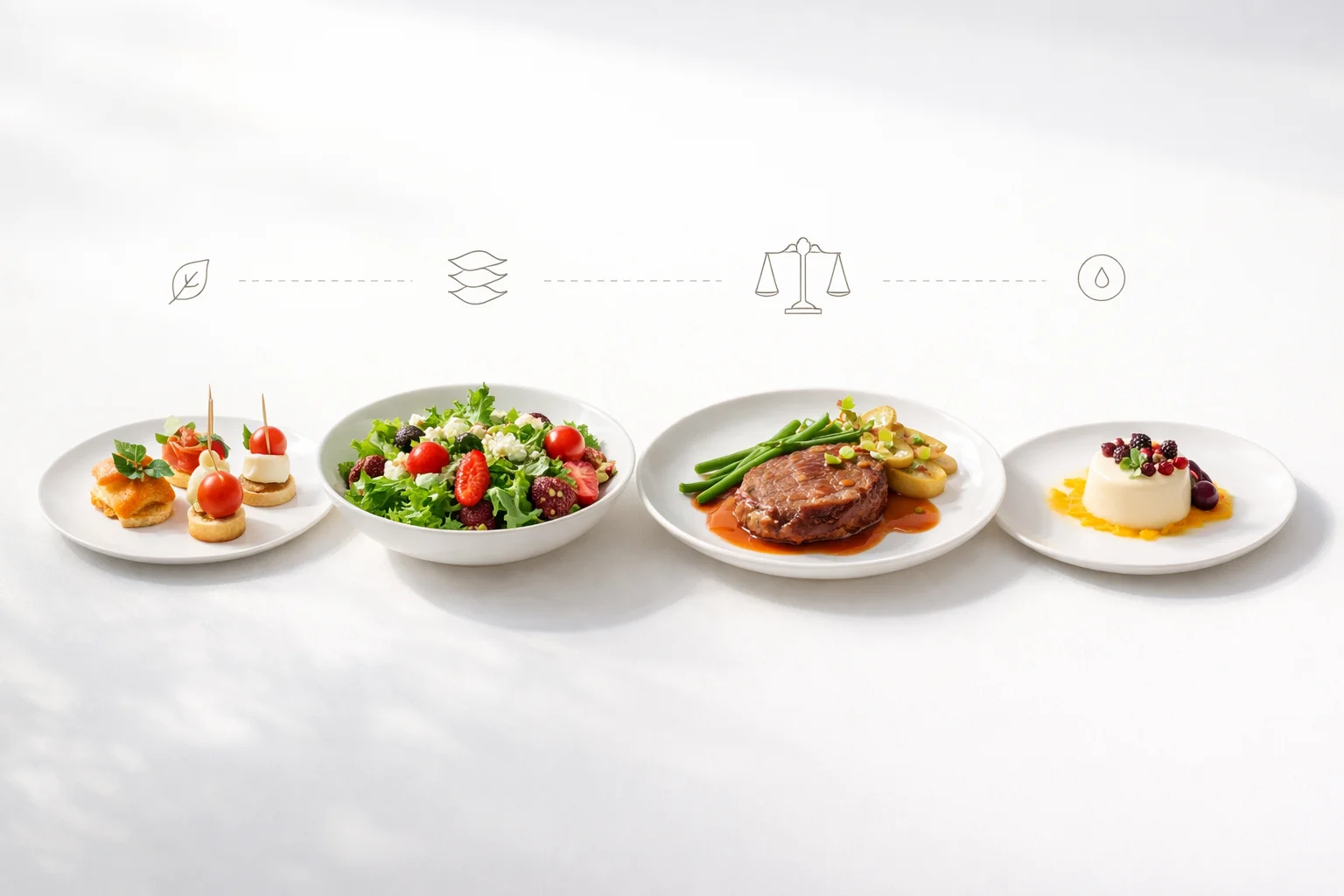
A good menu is built as a unified system, not just a set of individual items.
When composing it, the following is taken into account:
the combination of flavors
the variety of textures
the balance of light and rich dishes
the sequence of serving
This helps maintain guests' interest throughout the event and avoids a sense of overload.
Logistics and Venue Capabilities
Even a perfectly thought-out menu must be feasible in practice.
The following is considered:
the presence of a kitchen at the venue
storage and preparation conditions
delivery distance
the number of guests
In some cases, logistics determines the final composition of the menu, adjusting initial ideas to real conditions.
Individual Event Tasks
Each event has its own characteristics and tasks.
For some clients, it is important to emphasize the lightness and modernity of the menu, for others—to create a spectacular presentation, and for others—to adhere to a specific budget.
Therefore, the menu is always formed individually and becomes part of the overall concept of the event, rather than existing separately from it.
Conclusion
A good menu is not just a list of dishes.
It is the result of precise tuning of all elements of the event: format, script, logistics, and client tasks. When all these details come together, the menu becomes a natural continuation of the event and enhances its atmosphere.
This approach is the foundation of Concept Catering's work.